

Risk & Progress explores human achievement, traces its origins, and charts the pathways that can carry progress forward—from personal flourishing to civilizational advancement. Subscriptions are free. Paid subscribers gain full access to the Pathways of Progress and Perils and Promise anthologies.

Why do some civilizations flourish, only to stagnate, and in some cases, fall? Why is the efflorescence of progress so disappointingly fleeting? Indeed, scientist and historian Donald Cardwell observed that “no nation has been very creative for more than a historically short period.” He noted that "progress in Europe, for instance, was “Led first by northern Italy and southern Germany, technological leadership passed briefly to Spain and Portugal in the Age of Discoveries to the Low Countries in the age of Reformation….From there, technological leadership passed to Britain during the first Industrial Revolution, then to the United States and Germany.” This observation, now known as Cardwell’s Law, suggests that creativity comes in localized bursts, like wildfires that, on historical timescales, quickly flame out.
But what drives Cardwell’s Law? Joel Mokyr suggests that innovative technologies and novel ideas must always struggle against old ideas, often guarded by powerful vested interests. When old ideas gain the upper hand, stagnation follows. Economists tend to resist this explanation; why would market actors resist adopting the technologies required to compete? This resistance, however, illustrates a mistaken understanding of the nature of competition. Economists imagine competition as the battle for profits between firms offering comparable products or services. The more important kind of competition, however, is not one product or service against another, but a new generation of technology against an older one. In other words, what matters isn’t the battle between IBM and DEC, who competed for mainframe sales, but IBM vs Apple, where the latter introduced an entirely new product line that the former hadn’t even considered.
This is the “creative destruction” that Joseph Schumpeter described: “In capitalist reality, as distinguished from its textbook picture, it is not [price] competition which counts but the competition from the new commodity, the new technology…striking not at the margins of the profits…but at their foundations and very lives.” In other words, new ideas and innovations can be existential for vested interests, and to protect themselves, they often feel obligated to pull political levers to slow progress. Great Britain led the Industrial Revolution, in part, because before ~1830, British institutions encouraged and supported innovation; they allowed the free market to run unabated. As Mokyr puts it, “The gradual decline of technological leadership in Britain was closely associated with the rise in resistance by vested interests and nostalgic romantics…Industry-specific studies show how Victorian British manufacturers were often dragged kicking and screaming to adopt new technologies…”
The center of creativity and innovation, therefore, seems to migrate toward more permissive localities. Indeed, a repeated chain of local efflorescences may have contributed to the rise of Western Europe. Unlike the large centralized empires that controlled Asia and the Middle East, Western Europe was fragmented under relatively small/weak nation-states and city-states. The “West” rose because competing centers of power had much to gain by tolerating new ideas and innovations and much to lose by remaining stubbornly intolerant of them. This applied not only to the diffusion of novel ideas, but also to the state’s ability to levy taxes. Governments are predisposed to confiscatory taxation, but restrain this impulse when they know doing so would drive away the most productive citizens to a nearby competitor. This is why Europe was generally more permissive of innovation and why the torch of progress was frequently passed around.
Unified, highly centralized empires, on the other hand, seemed to struggle to ignite and sustain innovation. The Roman Empire is remembered for its technological prowess and infrastructure, including its vast system of roads and aqueducts. The Romans, however, were most innovative under the more decentralized and politically open Republic; the Empire lived on borrowed time. Indeed, Lactantius, a professor of rhetoric under Roman emperor Diocletian, predicted the fall of Rome at the hands of high taxes and heavy regulation, lamenting that ‘tax collectors began to outnumber taxpayers’ and ‘a multitude of governors and hordes of directors oppressed every region – almost every city; and to these were added countless collectors and secretaries and assistants to the directors.’
In a large empire, productive spirits had nowhere to go, and anti-progress policies were allowed to fester and compound, with devastating consequences for the people who lived in them. While printing press technology spread like wildfire across Europe, the Muslim Ottoman Empire famously prohibited printers from reproducing Arabic text. The law was justified, in part, to protect wealthy and politically connected calligraphers and scribes. It probably did, but at the expense of everyone else and the empire itself. Three centuries later, when the prohibition was finally lifted, the Muslim world found itself far behind Europe in the diffusion of novel ideas, innovation, and general literacy.
Mokyr, who was writing in 2003, concludes with a word of caution against continued European political integration, writing “there is an intrinsic difference between openness, which allows for the free movement of goods, factors, and technology between different economies, and the unification of non-market institutions which determine the constraints under which market economies work….It is precisely the unique combination of mobility and political diversity which accounted for the European success. A further shift toward even further integration may yield diminishing marginal benefits…while imposing an unexpected cost in the long run: the decline in the institutional diversity and creative pluralism yielding increasing danger that conservative forces could…reduce receptiveness to innovative ideas.”’
These words now ring prescient.
All that said, political fragmentation was not always necessary or sufficient to guarantee technological creativity either. China’s Song dynasty was quite innovative, for a time, despite relatively high centralization. On the other end of the spectrum, extreme political balkanization even brought destruction to otherwise prosperous regions, like Italy after 1490 or the Spanish Netherlands after 1580. The historical record suggests that the optimal size of a “state” is the “city-state,” but city-states often found themselves conquered by larger political units, leading to stagnation and demise. Examples of this include Carthage, Venice, and Antwerp. Success, however, was possible when city-states cooperated and shared defense resources so they could resist invasion.
Hacking Cardwell’s Law?
Cardwell’s Law raises an important question for the future of human progress: Is it possible to design a government that guards against its own worst impulses? Or, at least one that passes the proverbial torch within its jurisdiction instead of surrendering it abroad? There may be institutional designs that could help, including zero-based regulatory budgeting, that prevent the reckless buildup of rules over time. Debt brakes might also restrain the total size of government, which could mitigate fears of extractive taxation. Any institution we design, however, would also have the power to undo or weaken the rules intended to constrain it, so there is no guarantee these guardrails would persist for more than a generation.
A more durable arrangement might be for a nation-state to delegate most administrative power to individual cities and allow those cities to peacefully compete with one another for people, capital, and ideas. The hope, of course, is that competition would bring out the best in each city, for the benefit of the collective whole. It might be surprising to learn that there is actually some precedent for this: special economic zones and charter cities. While not a direct analogue, many countries have experimented with these special pilot zones to test new economic models and policies on a small scale before rolling them out more widely.

Admittedly, charter cities and SEZs have a mixed track record. Some, like Prospera in Honduras, are flailing, in part because the Honduran government’s commitment to Prospera's independence has wavered. Others, however, have proven wildly successful, like Dubai. Perhaps the greatest example of an SEZ’s potential can be found in Shenzhen, China, where a new economic system for a nation of over 1 billion people was thoughtfully piloted. In 1978, China’s then-leader Deng Xiaoping promoted politically difficult economic reforms by testing them in SEZs. Initially, the SEZs were chosen because they were relatively undeveloped; they had few vested interests that might resist and contributed little to the national tax base. Shenzhen was immediately successful. Within a generation, a small village exploded into a wealthy metropolis.
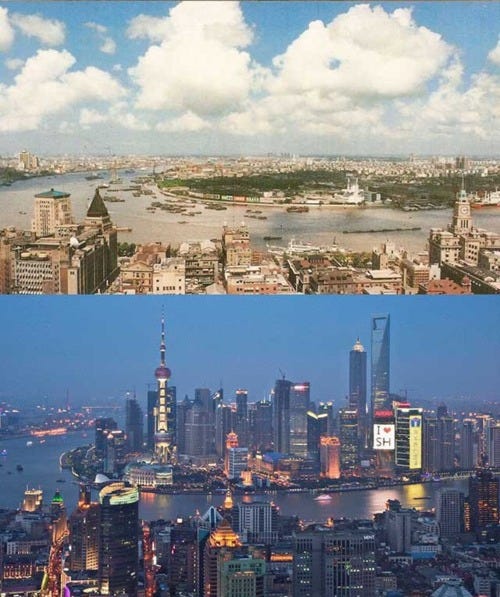
Lessons learned from Shenzhen and the other SEZs were then systematically copied and rolled out in additional pilot zones across China’s Eastern seaboard, including more established cities like Shanghai in the 1990s, before they were rolled out nationally. China’s SEZs reflect the Chinese concept of 摸着石头过河, or “crossing the river by feeling for the stones.” Instead of the sweeping “shock therapy” economic reforms, attempted in the former U.S.S.R., Chinese policymakers took small, calculated steps forward, first “testing the waters” in special economic zones. Pilot zones were the “stepping stones” where lessons learned, both positive and negative, were considered before taking the next step. The results are unmistakable. For over 30 years after 1978, China witnessed economic growth rates averaging nearly 10 percent annually; a pace of growth that was and remains unprecedented in human history. As a result of this breakneck growth, China rose to become the world’s second-largest economy, lifting hundreds of millions of people out of poverty.
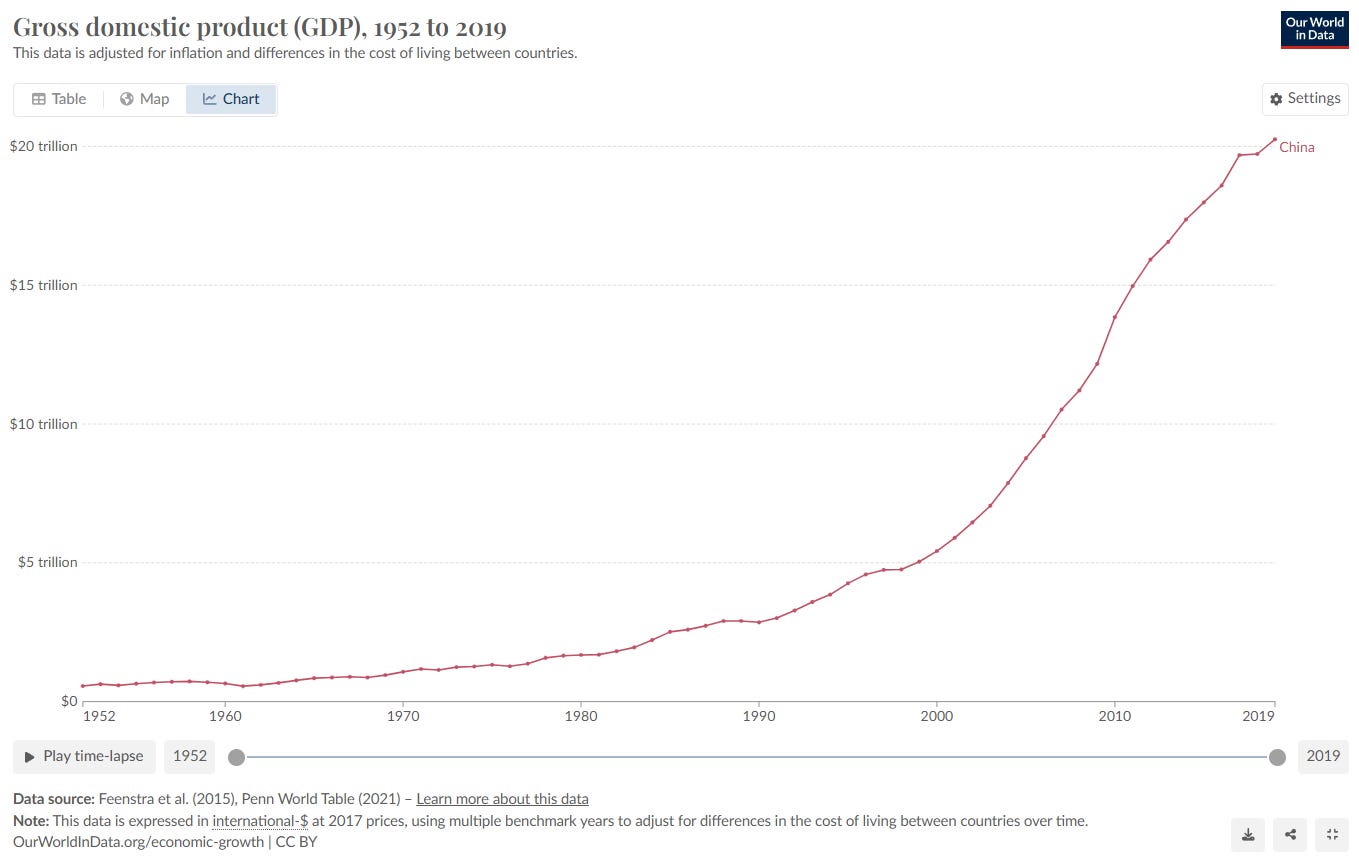
Still, I wonder if there is more to the story. SEZs and charter cities have a mixed track record, so why were China’s so wildly successful? I posit that China’s incredible growth may owe as much to local experimentation as it does to competition between the SEZs themselves. While many think of China as a unified, highly centralized administrative state (and in some regards it is), China’s cities and provinces have significant leeway in deciding how to implement Beijing’s edicts. Furthermore, local governors, all members of the Communist Party, can be promoted if they deliver on KPIs, including how well they grow their jurisdictions’ GDP. The race for promotions stokes fierce competition between local governments; to drive growth and attract businesses and factories, they roll out preferential tax policies and low-interest loans, offer cheap land, and build world-class infrastructure. This competition drives a culture that welcomes growth and innovation. For this reason, modern China may be functioning more like 19th-century Europe or early 20th-century America.
Alas, the Chinese model is likely not replicable outside the Middle Kingdom, but it does suggest that it’s possible to reinvigorate competitive forces between localities. A federated nation might be able to “hack” Cardwell’s Law by providing its cities a high degree of political autonomy. The national government would couple this political autonomy with economic integration, stoking competition between cities by mandating free trade, free migration, and the free flow of information between them. People and businesses then vote with their wallets and their feet. If one city's tax burden gets too high, people can simply leave for another. The most pro-progress city, naturally, will attract the most talent and capital, forcing the others to learn from its success. The creativity “torch” will pass from one city to the next, but will always remain inside the larger nation-state which benefits from unabated prosperity.
You also may like…


- and so? Is there a lesson here for New Zealand?
I think the challenge you're trying to confront here is that different dimensions do better on different levels. At a political and military level, nation-states appear to work best. They are big enough to be effective but small enough to be efficient.
On the economic dimension, city states do best. I think this is because they are a level of government that inherently has competition with other cities but are unable to leverage moats like tariffs, monetary policy or immigration policy to protect themselves (unless there are different moats at higher levels protecting them).
This is a big reason why the US has done so well. Nationally we operate at the nation state level politically and militarily, but economically states (usually based around their 1-3 largest cities or metro areas) function as "city states" plus their hinterland and have been fairly free to set policy as long as it doesn't infringe on other states. However that model is now breaking down.
Couple of reasons why. First, some states are getting big enough to try and ruleset for everyone else... that often negatively impacts both themselves and, where they succeed, everyone else. Second, the federal government has continued to exercise increasing power over the states in all domains, but especially economically. Leveraging their borrowing and taxation powers, and the moat that it has to protect itself from consequences (like emigration or bankruptcy), the federal government is increasingly acting like an empire internally, which, like Rome, is diminishing the advantage that economic decentralization gave us.